
The Street: “Don’t Liquidate Your Stock Investments: A Recession- and Pandemic-Proof Investment Strategy”

The Street, July 17, 2020: On today’s show, Marguerita Cheng, CFP®, examines whether it makes sense to liquidate stocks in the midst of the COVID-19 pandemic and convert funds to cash and bonds.
By Marguerita Cheng, CFP®, CEO Blue Ocean Global Wealth Management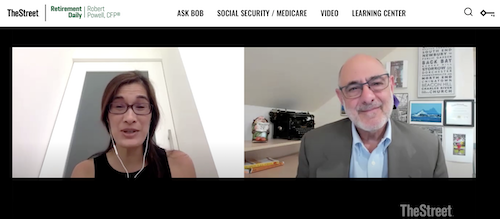
Many events in recent weeks and months have had significant economic impacts on individuals and the economy. COVID-19 and the stay-at-home orders that resulted from it has led to an increase in the unemployment rate. According to statistics from the publication, Trading Economies, the unemployment rate increased from 3.6% in January 2020 to 14.7% in April 2020.
At the end of the first quarter of 2020, the United States’ real GDP fell by 4.8%.
These factors also affected the stock market. The Dow Jones Industrial Average(DJIA), which began at 28,868.80 on January 2, 2020, fell to 18,591.93 on March 23, 2020.
On March 8, 2020, the DJIA fell more than 2,000 points, the most significant daily drop since the financial crisis of 2008. Eight days later, there was a daily drop of almost 3,000 points.
Because of the economic impacts of COVID-19, many people are considering liquidating their stocks and converting the funds to cash and bonds.
Is this a smart strategy? More specifically, for those who are preparing for retirement or are already retired, is it a wise strategy to liquidate your stock investments in light of the current circumstances?
Three Important Goals for your Investment Strategy
Generally, investors who are nearing retirement (or are already retired) tend to have three goals when creating an investment strategy. First is the safety and liquidity of their investments—they do not want to lose their money. Similarly, they want to have access to their funds to meet necessary expenses during retirement. It does not make sense to borrow money at a high-interest rate to buy what you want or take care of emergencies because you cannot access your funds.
Secondly, they want their investments to grow and provide retirement income for many years to come.
A third goal, especially for older and retired investors, is to have enough money and assets to leave to their children and dependent relatives or for causes that are important to them.
For the sake of simplicity, let us label these goals as liquidity, longevity, and legacy. Liquidity is the desire for safe and liquid investments that meet immediate and urgent needs. Longevity is the desire for high-return investments that grow in real value. Legacy is the desire to leave money for the family, relatives, and favorite causes after death.
Investors’ problem is that none of the three major asset classes alone can help achieve these goals.
The Problem with Stocks
We can all admit that stocks are volatile in the short- and medium-term. Stock prices rise and fall in response to news and information that affect investors’ perception and confidence in the stock market.
The price movement in a specific stock often does not reflect the stock’s fundamental (intrinsic) value. Therefore, stocks are subject to short-term changes that do not reflect a change in the stock’s real value.
Consequently, stocks, in most cases, cannot help an investor achieve the liquidity goal.
The Benefits of Stocks
However, while stocks are volatile in the short term and medium term, they provide the highest returns in the long term. Over time, the nominal value of a stock (market price) tends to match the stock’s real value (intrinsic value).
Also, stocks provide returns that beat inflation. Inflation reduces the real value of money. A thousand dollars today is worth less than a thousand dollars in three years because of inflation. Therefore, when we put money aside for the future, we want to ensure the rate of return on the money is higher than the inflation rate.
The Problem with Cash and Bonds
Because of stocks’ volatility, investors who do not want to see the rise and fall in the value of their money prefer to invest in bonds (or other fixed-income securities like CDs) or keep their money in cash (checking or savings accounts).
The problem with cash and bonds is that they often return a yield that does not outperform the inflation rate. In the long term, depending on the average inflation rate, cash and bonds could be worth less than their initial value (if the inflation rate exceeds the nominal rate of interest on bonds, for example).
Consequently, cash and bonds cannot help an investor achieve longevity and legacy goals.
The Benefits of Cash and Bonds
While cash and bond returns may not outperform inflation, they are safe and liquid. Unlike in the stock market, where a stock’s value can fall from $40 to $4, the nominal value of your cash in a checking or savings account will always increase. Also, the rate of return on bonds (and other fixed-income securities) are fixed. Unless you sell before maturity, you will get the interest payments during the bond’s life and the principal at maturity.
Consequently, cash and bonds can help achieve the liquidity goal; your money is not subject to stock market volatility.
The Problem with Annuities
Another class of investments for investors considering retirement are annuities. Annuities do provide protected growth and offer lifetime income. While annuities play an important role in ensuring lifetime income, they have higher ongoing expenses and fees. Annuities are designed to help individuals obtain additional sources of predictable cash flow in retirement and address longevity risk or the fear of outliving one’s assets. The funds within an annuity contract may not be readily accessible.
Consequently, annuities cannot help investors achieve liquidity goals.
The Benefits of Annuities
Annuities are guaranteed payments that begin at an agreed time. Because of their guarantees, annuities help investors achieve the longevity goal.
The Recession and Pandemic Proof Strategy
How then can investors achieve these three goals when there is no single investment class that helps them achieve them?
The solution is to think in terms of investment buckets. Instead of looking for an investment class (equities, cash or bonds, and annuities) that best achieve these three goals (there is none), it is better to think of these three goals in an independent and integrated way.
Independent
In this investment bucket strategy, each of these goals has an independent bucket of investments.
For the liquidity goal, you will need a liquidity bucket that consists of cash and other fixed-income securities that are safe, non-volatile, and liquid. The liquidity bucket is where you want to put your emergency funds.
To achieve the longevity goal, you will need a bucket consisting of equities, mutual funds, and annuities.
You will need a bucket that consists of growth stocks and other assets like small businesses and real estate for the legacy goal.
Rather than choosing any of these three categories of assets, an investor can use all of them in their proper buckets. It is no longer an “either-or” but a “both-and” situation.
Integrated
The integration comes at the level of allocation. What percentage of your investments should go to the liquidity, longevity, and legacy buckets? The right allocation formula will ensure you are on the right track at every stage in your financial journey.
The first thing about such allocations is that they are not static. Different periods of life require different allocation formulas.
Here are a few tips:
- The further you are from retirement, the higher your investment in the longevity and legacy bucket. For example, when you are 20 or 30, investing 80% of your funds in the longevity and legacy buckets is a sound decision. At this time, you have enough years before retirement to weather the short- and medium-term fluctuations in the stock market and earn significant returns.
- As you near retirement (or enter retirement), you will need to increase investment in the liquidity buckets so you can always have enough liquid funds for your immediate needs and emergencies during retirement.
- The funds you will need in the liquidity bucket during retirement will depend on the income you are expecting from Social Security payments and pension. The higher the income from those sources, the lesser the funds you need in the liquidity bucket and the more you can invest in the longevity and legacy buckets.
Benefits of the Bucket System
· It prevents you from missing stock market recoveries: Many retirees and non-retired investors are quick to cash out from the stock market when there is a downturn. The disadvantage is that you will miss out when there is a recovery and lose money in potential returns. We have seen stocks that went down and then soared up to unimaginable heights.
With the investment buckets system, your investment in equities is in a different bucket from your investment in cash and bonds. Since you already have enough funds in cash and bonds for immediate needs and emergencies, you do not need to sell your stocks, except it can no longer help you achieve the longevity goals (due to change in fundamentals).
Furthermore, because your goal is longevity, you can weather the short-term variations and focus on long-term growth (which is the goal for your longevity bucket).
- It protects you from debt or losses: There is a temptation to put all your money in stocks because the market is in an upward trend, and the prospects are good. However, needs may arise that require you to make some purchases. If you do not have a liquidity bucket, you will have to borrow money (at a high-interest rate) or sell your stocks at a lower price and miss possible future growth in the stock’s value.
- It gives you flexibility: The investment bucket system gives you the flexibility to make changes to your allocation formula as circumstances change. A 60-year-old can have a different allocation than a 40-year-old, while they both benefit from this independent and integrated approach.
- It is recession- and pandemic-proof: With this approach, you can cope with recessions and pandemics. You already have enough money in your liquidity bucket to meet immediate needs and emergencies. You do not need to sell your longevity and legacy bucket investments because of the current circumstances. Instead, you can weather the storm while you depend on the funds in your liquidity bucket.
Conclusion
An investment bucket strategy can help retirees and those nearing retirement achieve financial stability in different stock market conditions. By dividing their investments into these three buckets, they will have a more diversified strategy to minimize debt, prevent them from missing the high returns in the stock market, and give them the flexibility to adjust their investments as their financial circumstances change.
About the author: Marguerita (Rita) Cheng, CFP
Marguerita (Rita) Cheng helps educate the public, policymakers, and media about the benefits of competent, ethical financial planning. As a Certified Financial Planner® professional and chief executive officer of financial advisory firm, Blue Ocean Global Wealth, Rita helps people meet their life goals through the proper management of financial resources.
She is passionate about helping them navigate some of life’s most difficult issues—divorce, death, career changes, caring for aging relatives—so they can feel confident and in control of their finances. Rita volunteers her time as a SoleMate, or charity runner for Girls on the Run, raising money to win girls’ scholarships. She is also a coach for 261Fearless, a global supportive social running network that empowers women to connect and take control of their lives through the freedom gained by running.